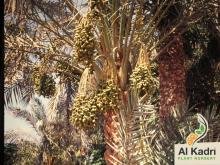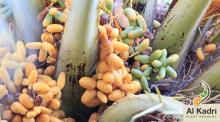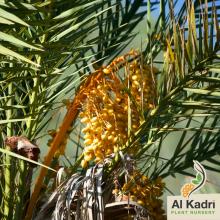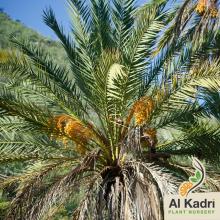
Date Palm
Origin and classification
The fruiting date palm belongs to the palm family
Its exact origin is unknown
It is believed to be the Arabian Gulf or Mesopotamia
It grows mainly in semi arid regions
Near groundwater rivers or springs
Distribution
Date palm cultivation is widespread
In Jordan and Iraq
And the Arabian Gulf countries
Tree description
Date palm is a monocot plant
A symbol of desert environments
Highly adapted to harsh conditions
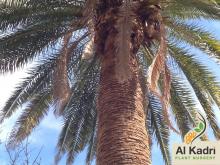
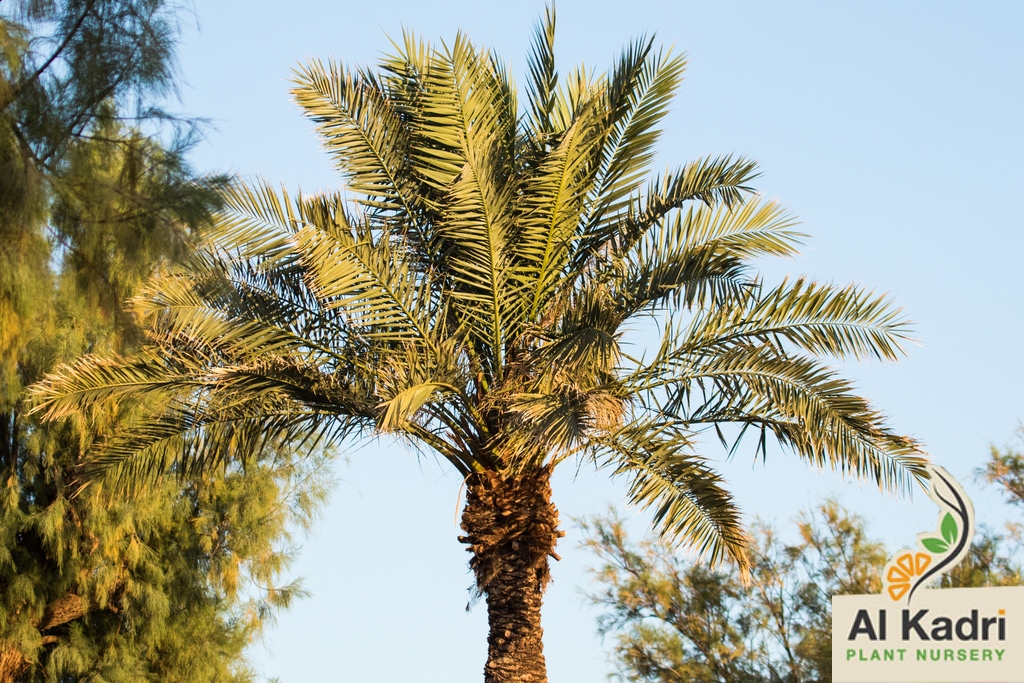
Tree height ranges from 15 to 25 meters
Depending on the variety
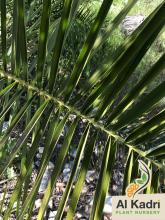
It has large pinnate leaves
Called fronds
Flowers grow in clusters
Fruiting begins at four years
In trees grown from offshoots
After 7 to 10 years
In seed grown trees
Production may last for a hundred years
Roots
Roots are deep and moderately growing
Tolerant to drought and flooding
Allowing growth in difficult environments
The tree grows in most soil types
Tolerates strong winds
High temperatures
Some varieties tolerate cold
Growth improves greatly
With good irrigation and fertilization
Pollination
Date palm is dioecious
Trees are either male or female
Male trees are needed for pollination
Or hand pollination is applied
Pollination is done by transferring pollen
To female flower clusters
In Jordan pollination occurs
From mid February to mid March
Female flowers
Have no color or scent
Do not attract insects
Consist of three carpels
Only one develops when pollinated
Flowers remain receptive
For 3 to 7 days
Male flowers
Contain six stamens
Release fine pollen grains when mature
Have a pleasant scent
Flowering starts from February or March
Until May
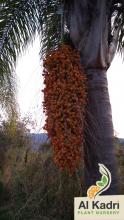
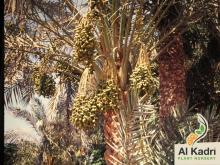
Fruits
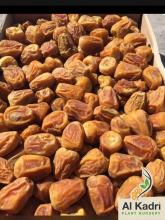
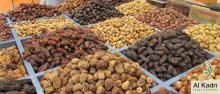
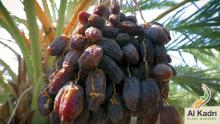
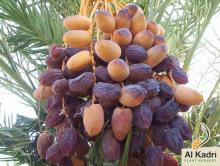
Consumed as dates or fresh rutab
Depending on the variety
Ripening begins
In early August
Nutritional value
Dates are a staple food since ancient times
They were a main food source for Arabs
Contain the highest sugar content among fruits
Sugars range from 70 to 78 percent
Easily digested
Quick energy source
Rapidly absorbed by the body
Rich in minerals
Ten dates daily
Provide full magnesium intake
Manganese and copper
And half of calcium and potassium needs
Enhance body activity
Act as a diuretic
Cleanse the liver
Support kidney health
Fibers help prevent constipation
Not recommended for obesity
Or diabetes patients
Temperature
Requires long hot sunny summers
And mild winters
Does not tolerate severe frost
Leaves are damaged at minus 6 degrees
Low temperature in the growing point
Stops growth
Short cold periods
Have limited effect
Heat requirements
High heat is essential for fruit ripening
Requirements vary by variety
Soft varieties
Need 1200 to 1400 heat units
Semi dry varieties
Need 1500 to 1700 heat units
Dry varieties
Need more than 2500 heat units
Humidity
Prefers dry climates
High humidity causes fungal diseases
And reduces fruit quality
Very low humidity
Causes fruit deformation
Best areas are
High temperature
Moderate humidity
Rainfall
Rain helps leach soil salts
Rain during pollination
Causes pollination failure
Rain during ripening
Causes fruit rot
Dry summers are preferred
Wind
Date palms tolerate wind
Strong winds may break tall trees
Especially with weak roots
Or pest infestation
Soil
Grows in most soil types
Tolerates soil salinity
Sandy soil is best
Alkaline soils should be avoided
Requires deep soil
For root stability
And nutrient availability
Irrigation
Requires adequate irrigation
Amount depends on age and variety
Regular irrigation
Improves yield and quality
Critical irrigation periods
Before pollination
After fruit set
After harvest
Reduced irrigation
With high groundwater levels
During full fruit ripening
In winter season
Fertilization
Needs moderate fertilization
Especially in poor soils
Organic or chemical fertilizers
Used when needed
Pruning
Done once a year
To remove dry fronds only
Best timing
Before pollination
After harvest
Propagation
By offshoots
Seeds
Or tissue culture
Offshoots
Best propagation method
Early production
True to type
Pests and diseases
False smut
Inflorescence rot
Red palm weevil
Mealybug
Varieties
Barhi
Medjool
Sukkari
Maluki
Qassimi
Khadrawi
Saffari
Ajwa
Khalas
Ghabra