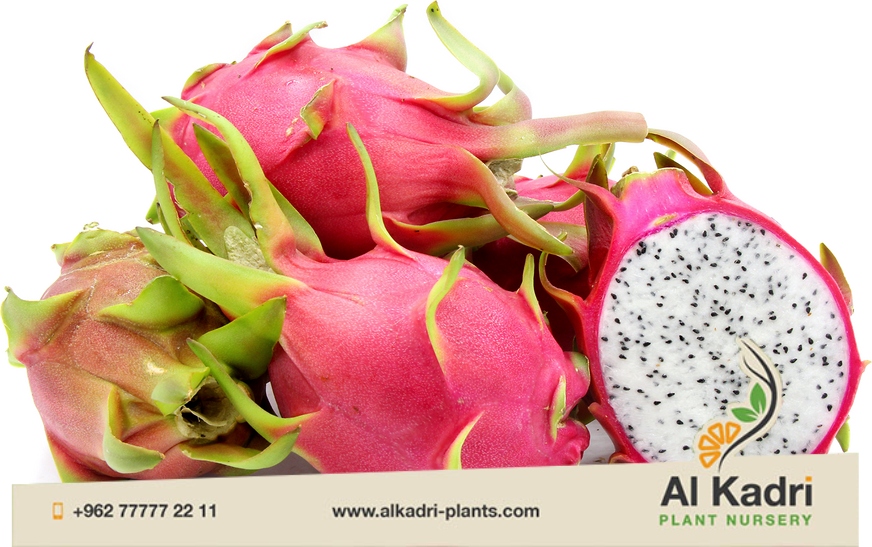
Dragon Fruit
Description
Tropical fruit
Rare in Jordan and Arab countries
Al-Qadri Nurseries provide seedlings
Fruits have unusual shape and sweet taste
Rich in vitamins and antioxidants
High yield and commercial potential
Can be grown at home or commercially
Suitable for sunny balconies or patios
Native to Central and South America
Also grown in Southeast Asia, Mexico, and South America
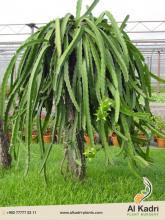
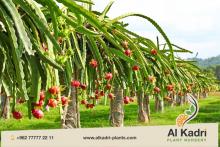
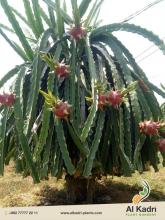
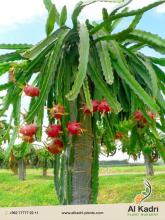
Cactus plant, climbing or creeping
Can grow up to 10 meters
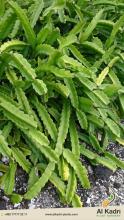
Leaves succulent, long, and ribbed
Stem strong and can be tied to a support
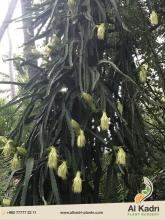
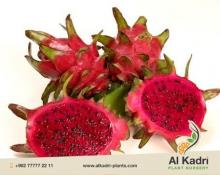
Fruits weigh 300-600 grams
Skin pink, purple, or yellow
Flesh white or red with edible black seeds
Sweet taste and crunchy texture
Eaten fresh or in salads and juices
Nutritional value
Low calories
Contains niacin, riboflavin, vitamin C, B1, B2
Rich in iron, calcium, phosphorus
Contains fiber and protein
83% moisture
Protects against cancer
Regulates blood pressure and cholesterol
Boosts immunity, prevents colds and asthma
Helps heal bruises and wounds
Appetite stimulant
Boosts and renews energy
Maintains eyesight
Strengthens bones and teeth
Helps with weight loss
Regulates blood sugar
Suitable conditions
Climate
Tropical and subtropical regions
Moderate regions without permanent frost
Optimal temperature 13°-29°
Tolerates high heat and light frost
Grows climbing or creeping up to 10 meters
Prefers full sun or partial shade depending on climate
Grown commercially or as ornamental plant
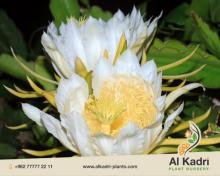
Flowers bloom at night
Flower once a year in moderate climates
Bloom 4-6 times a year in tropical climates
Soil
Rich, well-drained soil
Irrigation
Regular watering during growth season (March-August)
Reduce watering gradually until January
Stop watering during dormancy (Jan-Feb)
Resume watering gradually in spring
Fertilization
Use balanced NPK fertilizers once a month during growth season
Propagation
Stem cuttings
Occasionally by seeds