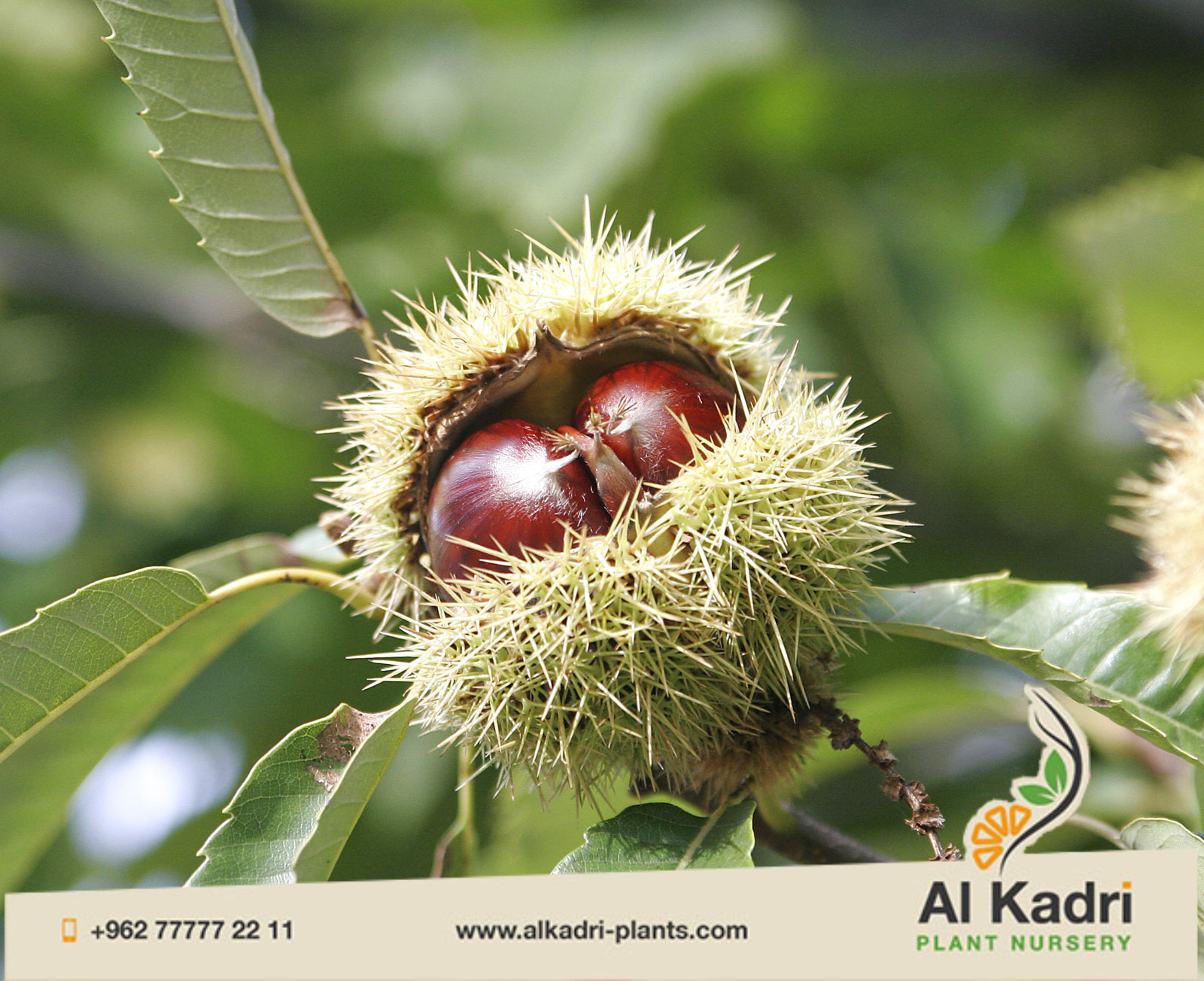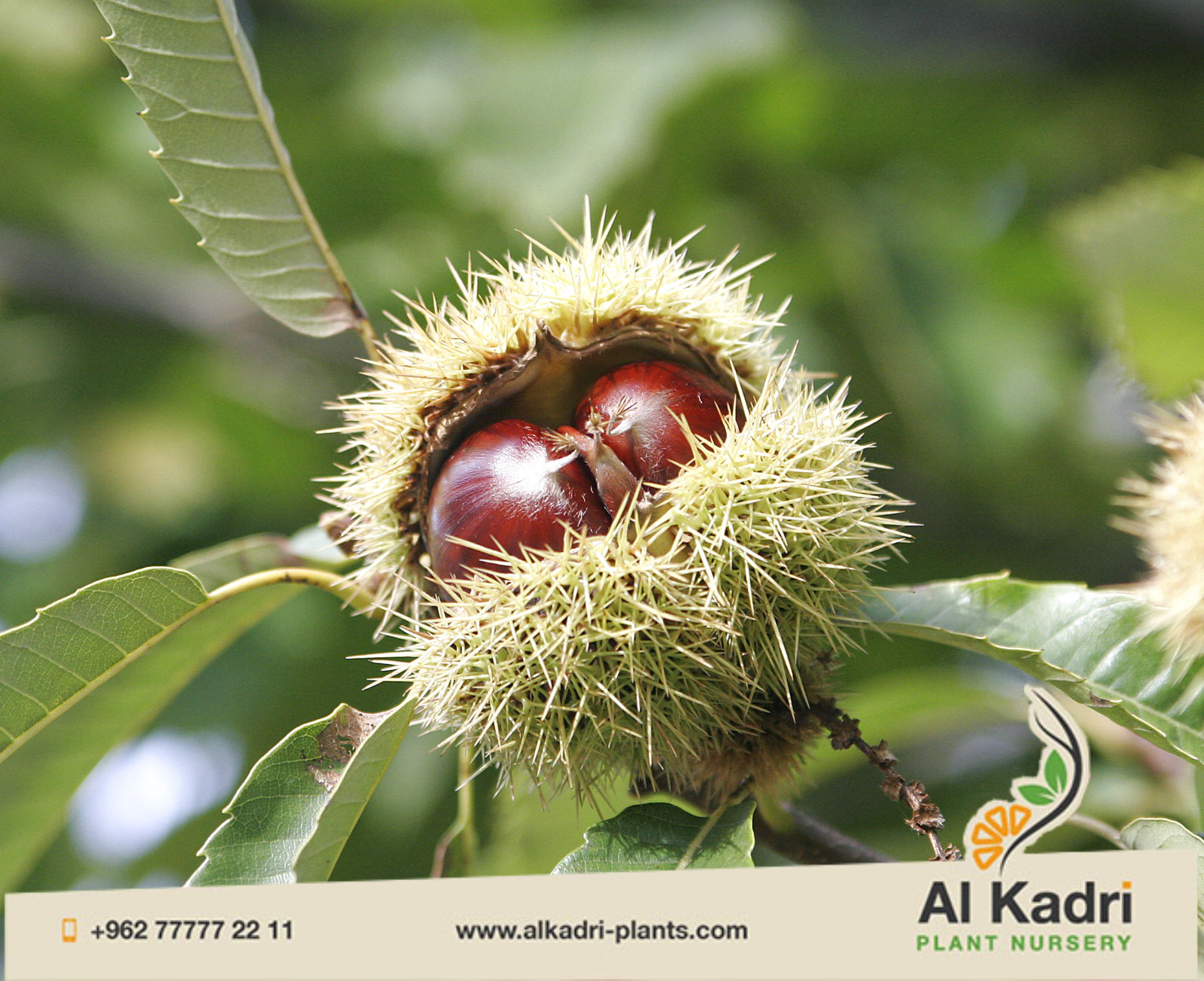
Castanea
Al-Qadri Nurseries import and propagate rare species
To guide farmers to suitable varieties for their region
To achieve commercial and nutritional benefits
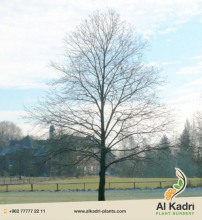
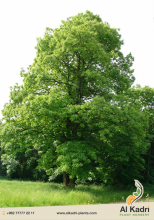
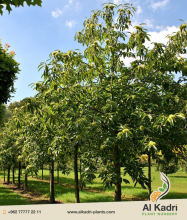
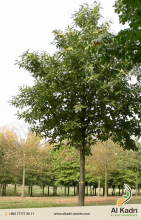
Chestnut or Abu Farwa is a large tree
Belongs to the oak family
Grows in temperate warm regions
Height reaches 30 meters
Long-lived and can live for thousands of years
Branches are flat and bark is smooth
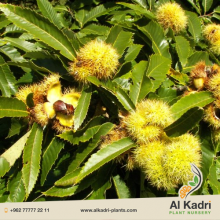
Leaves are simple, ovate 20-25 cm
Underside is dark green
Buds are large and hairy
Male flowers are thread-like and yellow
Female flowers are at the base of male flowers
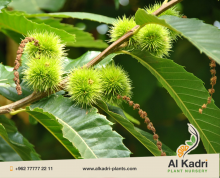
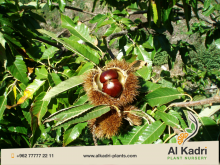
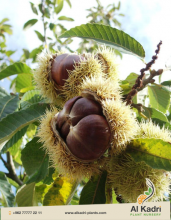
Fruits are large surrounded by spiny burrs
1-3 fruits per burr
Chestnut produces regularly
From 25 years if trees are alone
From 40 years if trees are grouped
Grows naturally in medium-altitude mountains
Tolerates sunlight
Does not like soils rich in active lime
Wood resembles oak but has fine rays
Good for poles and wooden boards
Planted for land greening and windbreaks
Resistant to forest fires
Fruits are edible and highly nutritious
Roasted in winter and eaten hot and tasty
Chestnuts are rich in vitamins C, B1, B2, B6, B9
Support skin, hair, and muscle health
Strengthen immune and nervous system
Contain minerals potassium, magnesium, iron, copper, phosphorus, manganese
Contain resistant starch fiber
Helps feeling full
Nutrients support muscles, nerves, arteries, and stomach
Suitable for children, vegetarians, and kidney patients
Climate
Grows well in mountains
Needs winter dormancy at least 4 months
Tolerates very low temperatures up to -30°C
Needs direct sunlight
Trees should be spaced to avoid shading
Soil
Deep fertile soil with moderate moisture
Slightly acidic pH 5.5-6.0
Sandy, loamy, or gravelly soils are suitable
Calcareous and shallow soils are not suitable
Water Needs
Loves water
Needs at least 800 mm annual rainfall
In dry areas needs summer irrigation
Drip irrigation is ideal
Water shortage harms tree and fruits
Planting
Plant by seed or sapling
Saplings are faster and save years
Distance between trees 8-12 meters
Support young trees with wooden sticks
Add fertilizer in spring
Prune in early summer
Plant multiple trees for pollination
Fertilization
Organic fertilizers preferred
Manure and plant-based compost
Helps nitrogen fixation and soil fertility
Chemical fertilizers not necessary
Can add small NPK if needed
Pruning
Remove crowded, diseased, or broken branches
Pests and Diseases
Chestnut blight caused by Cryphonectria Parasitica
Fruit weevil Curculio Elephas
Mite pests on leaves and branches
European varieties are resistant
Propagation
Seed: plant in Jan-Feb
Starts fruiting after 25 years
Grafting: in June-July
Cuttings: taken from last year branches
Length 25-35 cm, dipped in rooting hormone
Varieties
European: Castanea sativa
Asian: Castanea crenat
American: Castanea dentata and Castanea pumila
European variety best for drought and pest resistance