Hazelnut
Alkadri Nurseries imports and propagates rare species
This helps farmers know which types grow in their area
It provides commercial and nutritional benefits
Tree Description
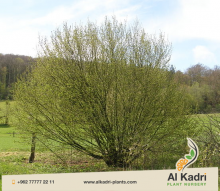
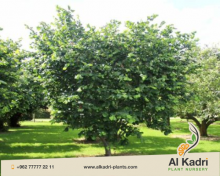
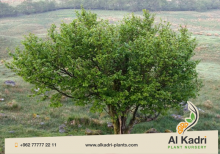
Hazelnut is a beautiful tree from the Quercineae family
It grows 6 to 7 meters high in fertile soil
Branches are soft and covered with leaves
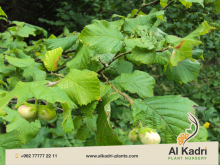
Leaves are serrated heart-shaped and alternate
Buds are round
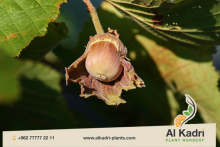
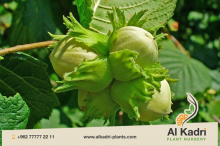
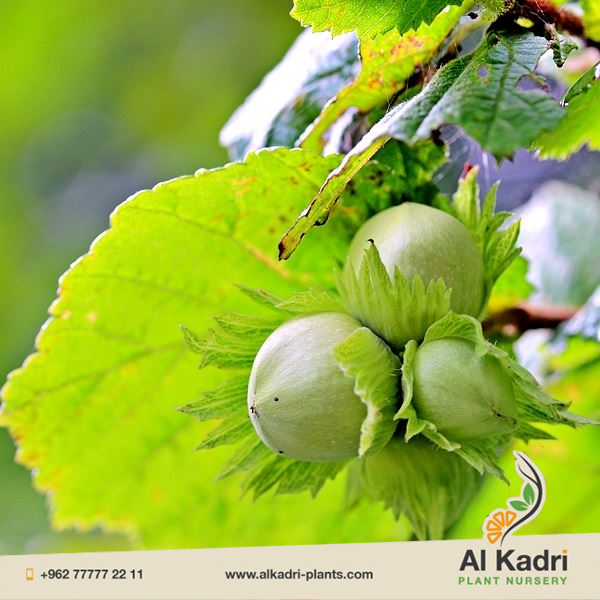
Fruit is enclosed in a hard husk
Inside is the seed with two cotyledons
This is the edible part
Fruits vary from round to oval
They grow in clusters of two to seven
Hazelnut trees help stabilize soil on slopes
They also act as windbreaks
Origin
Hazelnut was cultivated in China 4500 years ago
The Romans introduced it to Britain
It grows in Central Europe Anatolia northern Syria Turkey Greece Iran Italy Spain Ukraine Azerbaijan and Russia
Trees bear fruit after three years
The productive period is fifteen to twenty years
Fruits fall naturally and are collected manually or mechanically
They are dried for storage
Nutritional Value
Hazelnuts are rich in vitamins A B B5 B6 and B9
They are high in healthy fats proteins and fiber
They contain magnesium phosphorus calcium copper and iron
They are a source of Omega-3 fatty acids
Good for the heart blood vessels teeth and gums
Hazelnuts strengthen hair and prevent hair loss
They help in tuberculosis kidney colic tapeworm fatigue pregnancy and diabetes
Hazelnuts are easy to digest and high in energy
Drying preserves and concentrates their nutrients
Suitable Conditions
Hazelnuts grow in mountains hills and plains
They suit humid semi-humid and semi-arid areas with summer irrigation
They need good light cold climate and moderate soil moisture
They tolerate winter down to minus twenty-five Celsius
Buds are sensitive at minus ten Celsius
Flowers are sensitive at minus five Celsius
Male flowers need 350 to 650 chill hours below 7.2 Celsius
Female flowers need 600 to 800 chill hours
Soil
Hazelnuts grow in light slightly acidic well-drained soils
They also grow in calcareous soils with 10 to 15 percent calcium carbonate
They tolerate heavy clay more than walnuts or pecans
Water Requirements
Hazelnuts need high water especially during summer
Mature trees need four to six irrigation cycles
Overwatering can cause excessive growth
This reduces fruit quality
Fertilization
Fertilization depends on soil type tree age size and local conditions
Organic fertilizers are applied once every three years
Twenty-five tons per hectare in autumn or early winter
Mineral fertilizers per hectare annually are
Seventy-five kilograms phosphorus
Forty-five kilograms potassium
Forty-five kilograms nitrogen
Phosphorus and potassium are applied once in autumn
Nitrogen can be split into several doses
Propagation Methods
Hazelnuts can be propagated by seeds
This is mainly for rootstocks for grafting
Seeds germinate slowly
They need two to six months cold stratification at 4–5 Celsius
Vegetative propagation by layering is preferred
Buds grow roots before transplanting
Varieties
Hazelnut varieties are classified by fruit shape
Round hazelnuts are common with high yield and good oil
Oblong hazelnuts are tubular white or reddish-purple
They are enclosed in a colored husk
Best commercial varieties come from Turkey Italy France and Spain