Walnut
Introduction
Walnut tree belongs to the Juglandaceae family
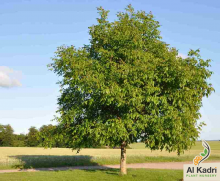
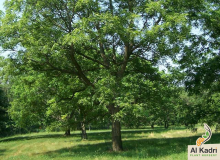
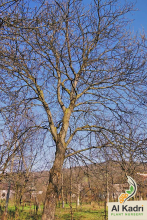
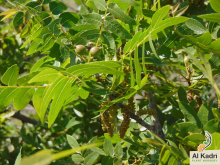
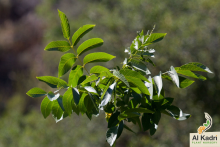
It is a large deciduous tree
Branches are dense and spreading
Height ranges from 10 to 40 meters
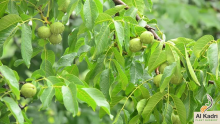
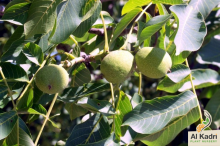
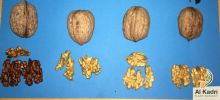
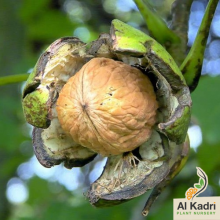
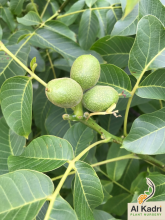
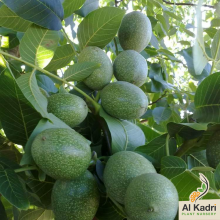
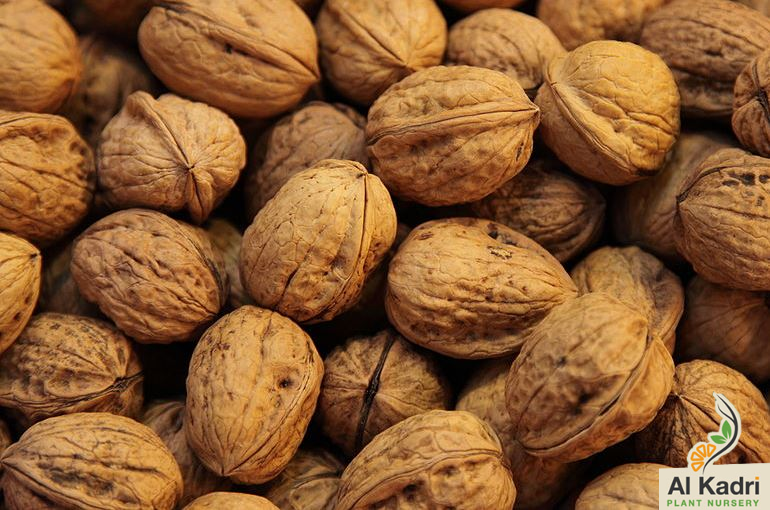
Fruit has a very hard shell
Inside is the edible walnut kernel
The kernel shape resembles the human brain
Walnut trees are found worldwide
Native to Central and Western Asia
Different names in Arab countries
Walnut in Jordan, Palestine, Iraq
Shirem in some areas of Syria
Ain Al-Jamal in Egypt
Kaaka in Morocco
Qaqaa in some areas of Saudi Arabia
Major producers: Iran, Turkey, China, USA
In Jordan, cultivation is limited to some mountainous areas
Fruit production starts at age five
Wood is used for high-quality furniture
Nutritional Value and Benefits
Walnuts are rich in protein and fiber
Contain vitamins, minerals, and antioxidants
Excellent source of Omega-3 fatty acids
Help reduce bad fats and support heart health
Can be eaten raw or roasted
Used in nuts and desserts
Walnut wood is strong, dense, and valuable
Leaves contain stimulating and antiseptic compounds
Used in medicines and natural dyes
Walnut trees are also planted as windbreaks
Environmental Conditions
Needs plenty of sunlight for flowering and fruiting
Prefers warm weather during growth
Tolerates cold during dormancy
Requires moderate cold winter to get enough chilling hours
Chilling hours needed: 450–1500 depending on variety
Extreme heat can burn fruits
Grows on mountain slopes and shallow valleys
Altitude up to 1800–2000 m above sea level
Avoid steep slopes, very wet areas, and high humidity
Soil
Prefers deep, fertile, well-drained soil
Tolerates pH 5–8, prefers around 6.5
Does not tolerate very salty or waterlogged soil
Roots need space to grow deeply (up to 3 m)
Avoid rocks or compact layers
Good drainage is essential
Irrigation
Needs about 1200 mm of rain per year
Half of it during summer
Supplemental irrigation needed if rainfall is low
Important for growth and fruit production
Irrigation methods: flooding, furrow, or drip
Avoid wetting the trunk to prevent diseases
Regular watering improves fruit size and quality
Fertilization
Needs nitrogen, phosphorus, potassium
Amount depends on tree age and soil
Young trees: 110 g of NPK 15-15-15 per tree
Divide into 2 applications in late spring and summer
Commercial orchards: 590 kg ammonium sulfate, 450 kg phosphate, 230 kg potassium sulfate per hectare every 3 years
Organic or green manure can be used as alternative
Leaf analysis recommended for nutrient deficiencies
Pruning
Pruning improves fruiting and wood quality
Young trees: form strong structure with central leader and 3 lateral branches
Mature trees: remove dead, weak, or crossing branches
Encourages fruiting wood and increases production
Harvesting
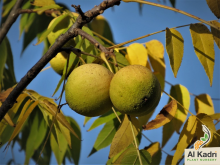
Harvest when 75% of the shell splits
From August to November depending on region and variety
Manual or mechanical collection
Dry the fruits properly after shell removal
Propagation
By seeds to produce rootstock for grafting
Grafting done at 2 years old (eye or whip graft)
Best rootstocks: black walnut, common walnut, Greek, Californian, Paradox hybrid
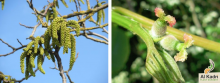
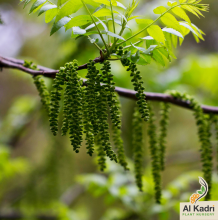
Walnut trees are monoecious (male and female flowers on the same tree)
Pollination occurs by wind
Pests and Diseases
Protect trees from insects and diseases
Remove weeds around trees
Avoid excess humidity
Control squirrels, larvae, flies, scale insects
Trunk coating with lime and copper protects from pests
Follow a preventive spraying program
Common Varieties
Syrian local walnut
Chambered walnut
Black walnut
English walnut
Yellow walnut
Ferk walnut
Japanese walnut
Parisian walnut
Marriott walnut
Gostin walnut
Pedro walnut
Hartley walnut